- About
-
Solutions
-
Services
-
Biosciences
- PureDisc™ Enabled Membrane Protein Production
- Assay Development and Transfer
- Biochemistry / Enzymology
- Biomarker Services
- Biophysics
- Cell-Based Assays
- Compound screening and cascade design
- Cryo-EM
- Fibrosis Assays
- Project Management and Consultancy Services
- Protein Expression
- Structural Biology
- X-ray Crystallography
- Chemistry
- Integrated Drug Discovery
- Computer Aided Drug Design
- Hit ID and Screening Services
- DMPK Services
-
Biosciences
- Target Classes and Modalities
- Therapeutic Areas
-
A-Z
- A
- B
- C
- D
- E
- F
- G
- H
- I
- K
- L
- M
- N
- O
- P
- R
- S
- T
- V
- X
-
Services
- Library
- News & Events
- Careers

In Vitro ADME
deep expertise • flexible solutions • close collaboration • rapid delivery
Domainex offers you a comprehensive suite of assays that provide essential information on the absorption, distribution, metabolism and excretion.

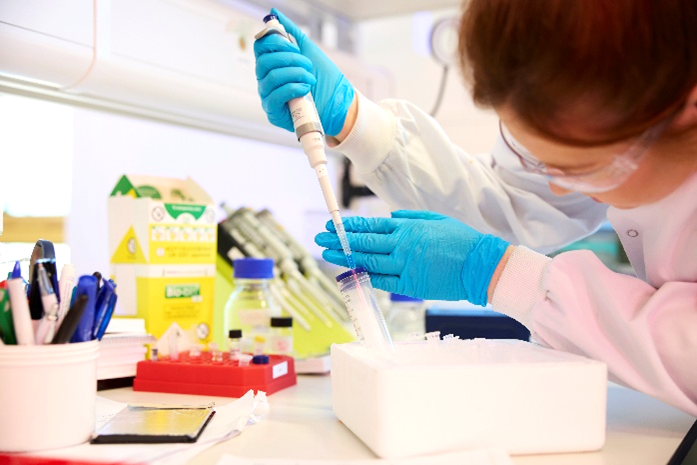 Understanding a compound’s absorption, distribution, metabolism, and excretion (ADME) profile is a vital part of any drug discovery programme, offering insight into how a molecule is likely to behave once administered in vivo. In vitro ADME data helps guide compound design decisions throughout hit-to‑lead and lead optimisation programmes, helping to generate candidates with favourable pharmacokinetic characteristics.
As compounds advance toward candidate selection, parameters such as predicted bioavailability, tissue distribution and clearance become increasingly important for early dose predictions. In addition, in vitro toxicity assays allow early identification of potential safety liabilities, reducing the likelihood of costly late‑stage failures.
At Domainex, we provide a comprehensive suite of ADME services to support compound optimisation across hit‑to‑lead and lead optimisation projects. These services can be deployed as standalone studies or delivered as part of an integrated drug discovery programme.
We’re passionate about working closely and collaboratively with our clients to solve their toughest drug discovery challenges. Whether you need a fully bespoke ADME assay or a tailored adjustment to one of our established platforms, our team is ready to collaborate and deliver the solutions that your project requires.
Absorption
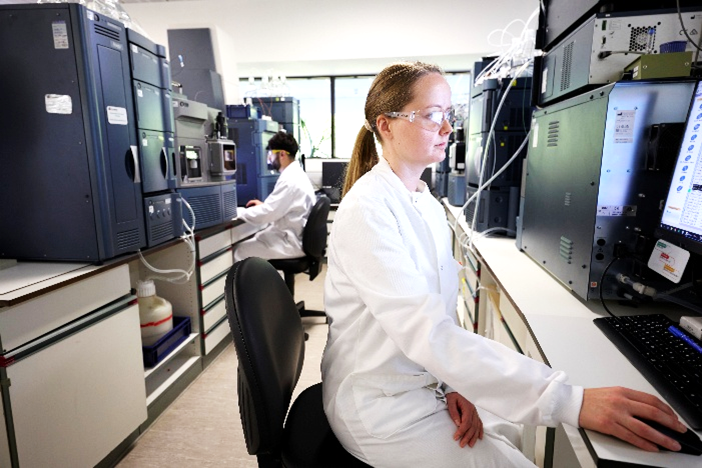
Absorption describes the movement of a drug from its site of administration into systemic circulation. It is influenced by the administration route, the compound’s physicochemical properties (such as solubility), and physiological factors like local blood flow. While intravenous dosing delivers 100% bioavailability, orally administered compounds rely heavily on efficient absorption, making this an important parameter to optimise.
In vitro absorption is typically assessed using permeability assays. At Domainex, we offer PAMPA for rapid screening of passive permeability, alongside Caco‑2 and MDCK assays, which provide more physiologically relevant data by capturing both passive diffusion and active transport. These assays can be run bidirectionally to evaluate efflux mediated by transporters such as P‑gp and BCRP.
Our EPSA assay also serves as a surrogate for blood–brain barrier permeability and is particularly valuable for beyond‑rule‑of‑five compounds, including peptides and PROTACs® (PROTAC is a registered trademark of Arvinas), which often behave atypically in standard permeability assays.
Distribution
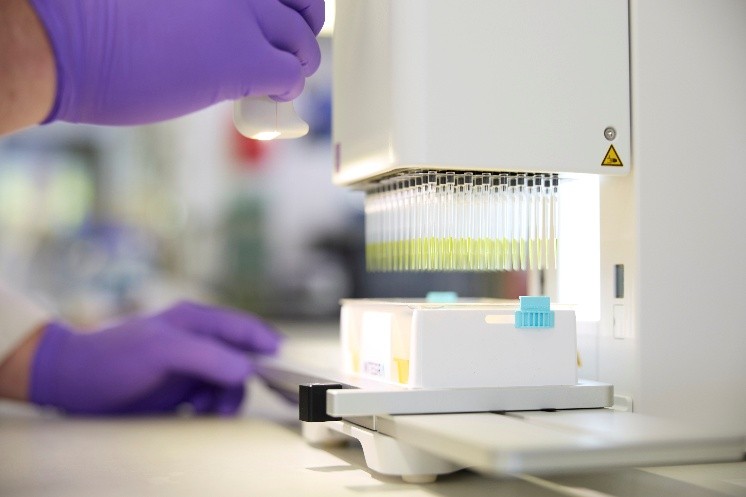 Distribution refers to the reversible movement of a drug from the bloodstream into tissues such as fat, muscle, and the CNS. It is influenced by tissue blood flow, the ability to cross biological barriers and plasma‑protein binding, which temporarily reduces the free, active fraction of drug.
At Domainex, in‑vitro distribution is assessed through plasma protein binding using equilibrium dialysis to quantify reversible association with major plasma proteins and determine the unbound fraction (fᵤ). We also determine tissue binding in matrices such as lung, muscle, and brain, with brain‑tissue studies providing fᵤ,brain, a key predictor of CNS exposure.
To support interpretation of plasma‑based PK parameters, we offer blood:plasma partitioning to determine how a compound distributes between whole blood, plasma, and red blood cells.
Where biochemical potency does not translate into cellular activity, our cell‑accumulation assays quantify intracellular drug levels over time, helping to explain poor penetration, off‑target effects, or other distribution‑related discrepancies.
Metabolism
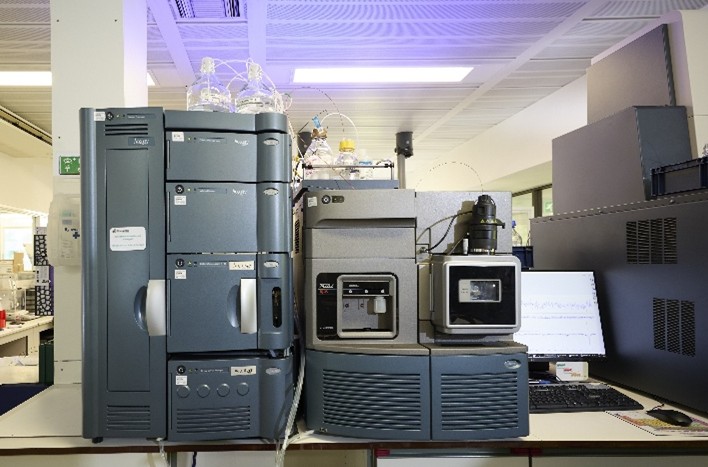
Metabolism is the enzymatic conversion of a drug into more water‑soluble species to improve elimination from the body; in some cases, these metabolites are the active therapeutic form (prodrugs). Most metabolism occurs in the liver through Phase I reactions (oxidation, reduction, hydrolysis, largely via CYP enzymes) and Phase II conjugation pathways (e.g., glucuronidation, sulfation, glutathione conjugation). These processes shape clearance, activity, and potential toxicity, making metabolic assessment a key component of ADME studies.
At Domainex, in‑vitro metabolism is evaluated using liver microsomes, hepatocytes, S9 fractions, and aldehyde oxidase (AO) assays. This range of systems captures both Phase I and II pathways and helps identify cases where AO‑mediated clearance is underestimated, such as in microsomes.
Beyond metabolic stability, we also assess compound behaviour in matrices such as plasma, blood, and cell‑culture media, where chemical or enzymatic degradation (e.g., esterase‑mediated hydrolysis) can rapidly reduce exposure. Identifying these liabilities early enables targeted structural optimisation to improve stability and pharmacokinetic performance.
Toxicology
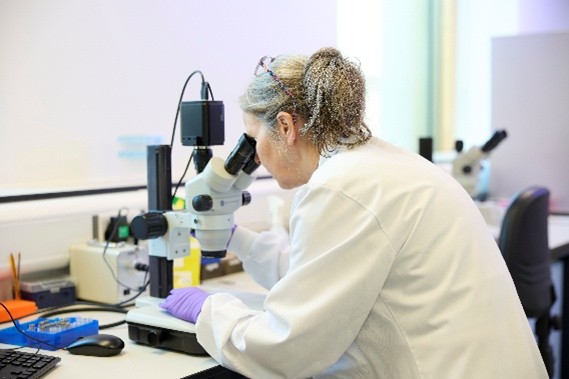
In vitro toxicology assessments are essential in ADME‑driven drug discovery as many safety risks stem directly from how a compound is absorbed, distributed and metabolised. At Domainex, early‑stage assays such as hERG inhibition (cardiotoxicity risk) and CYP inhibition (drug–drug interaction potential) help flag common mechanisms of clinical failure. Combined with broader ADME‑tox profiling, these studies can identify liabilities such as tissue accumulation, reactive metabolite formation, or impaired clearance, enabling medicinal chemists to optimise compounds for safer progression into preclinical development.
Physicochemical Profiling
Physicochemical properties play a foundational role within in vitro ADME because they directly influence how a compound behaves across every stage of its pharmacokinetic journey. Parameters such as lipophilicity, solubility and polarity govern key biological processes, including membrane permeability, tissue distribution, metabolic stability and mechanism of clearance. These same properties can also be used to anticipate in vivo outcomes—such as whether a compound will readily cross biological barriers, accumulate in particular tissues, interact with metabolic enzymes or transporters, or present potential toxicity risks.
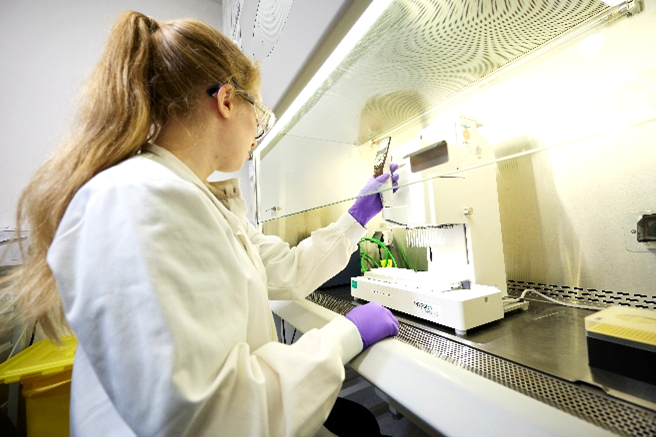 Evaluating physicochemical characteristics early in a programme helps identify liabilities before they become costly, guiding rational structural optimisation to improve solubility, permeability, metabolic robustness, and overall developability. This ensures that compounds are not only potent but also possess balanced drug‑like behaviour, increasing the likelihood that they will translate successfully into in vivo studies and ultimately progress toward high‑quality candidate molecules.
At Domainex we offer a range of physicochemical profiling assays including ChromLogD, shake flask LogD, aqueous stability as well as kinetic and turbidimetric solubility assessments.
Frequently Asked Questions
Can I access ADME assays as standalone services?
Yes. Domainex offers ADME assays either as part of an integrated drug discovery programme or as standalone services, depending on your project needs.
Do you provide pharmacokinetic (PK) studies as well?
Domainex collaborates with trusted research partners to arrange in vivo pharmacokinetic studies, offering a seamless transition from in vitro ADME profiling to PK assessment.
Can you design formulations for dosing studies?
Yes. Domainex can design experimental formulations suitable for IV, PO, SC, and IP dosing routes.
How do you support projects involving covalent inhibitors?
Domainex offers:
- Reversible covalent inhibitor binding assays
- KInact/ KI assays for irreversible covalent compounds
What sample types can you assess for stability?
Domainex offers:
- PBS
- Cerebrospinal fluid (CSF)
- Plasma
- Blood
- Other matrices depending on projects
How quickly can Domainex deliver ADME results?
Turnaround times depend on assay type and batch size, but many in vitro ADME assays can be completed within a few days. Larger panels or complex bioanalysis may require longer.
Are your ADME services compatible with HTE/D2B workflows?
Yes Domainex have adapted some assays to be compatible with higher throughput analysis where required, we have validated our microsomal stability assay for use with crude D2B mixtures by showing that the presence of crude reaction components does not affect compound turnover
Do you provide metabolite identification and structural elucidation?
Yes. Domainex offers metabolite ID using LC‑MS/MS, including identification of soft spots and pathways relevant to clearance and safety.
Start your next project with Domainex
Contact one of our experts today