- About
-
Solutions
-
Services
-
Biosciences
- PureDisc™ Enabled Membrane Protein Production
- Assay Development and Transfer
- Biochemistry / Enzymology
- Biomarker Services
- Biophysics
- Cell-Based Assays
- Compound screening and cascade design
- Cryo-EM
- Fibrosis Assays
- Project Management and Consultancy Services
- Protein Expression
- Structural Biology
- X-ray Crystallography
- Chemistry
- Integrated Drug Discovery
- Computer Aided Drug Design
- Hit ID and Screening Services
- DMPK Services
-
Biosciences
- Target Classes and Modalities
- Therapeutic Areas
-
A-Z
- A
- B
- C
- D
- E
- F
- G
- H
- I
- K
- L
- M
- N
- O
- P
- R
- S
- T
- V
- X
-
Services
- Library
- News & Events
- Careers

Fibrosis Assays
deep expertise • flexible solutions • close collaboration • rapid delivery
Pioneering Cellular Models for Fibrosis, Inflammation, and Regenerative Biology
Fibrotic diseases are characterised by excessive extracellular matrix (ECM) deposition, persistent inflammation, and aberrant tissue remodelling leading to dysregulated wound healing. These mechanisms underpin a variety of debilitating conditions, including pulmonary fibrosis, fibrotic interstitial lung diseases, liver and cardiac fibrosis, and kidney fibrosis.
Key to this physiology is the interplay between immune cells, fibroblasts, and epithelial or endothelial cell types. Macrophages, T cells, dendritic cells, and natural killer (NK) cells modulate fibroblast activation and myofibroblast differentiation through signalling pathways including TGF‑β/Smad, NF‑κB, JAK/STAT, and PI3K/AKT. These reciprocal interactions regulate ECM turnover, tissue stiffness, inflammatory persistence, and repair quality across diverse organs.
To support client programmes we offer a number of physiologically relevant and scalable human in vitro models that replicate key mechanisms in fibrosis. These platforms enable our clients to accelerate the discovery, validation, and optimisation of next‑generation therapeutics.
Functional Fibrosis Readouts
Domainex have access to healthy and diseased primary human fibroblasts and epithelial cells and a wealth of experience in functional fibrosis readouts.
Scar in the Jar Assay
- Macromolecular crowding to accelerate models of extracellular matrix deposition
- Quantification of collagen I and III and fibronectin deposition
- Multiplexed readouts allow parallel monitoring of matrix deposition, cell proliferation and cytokine secretion
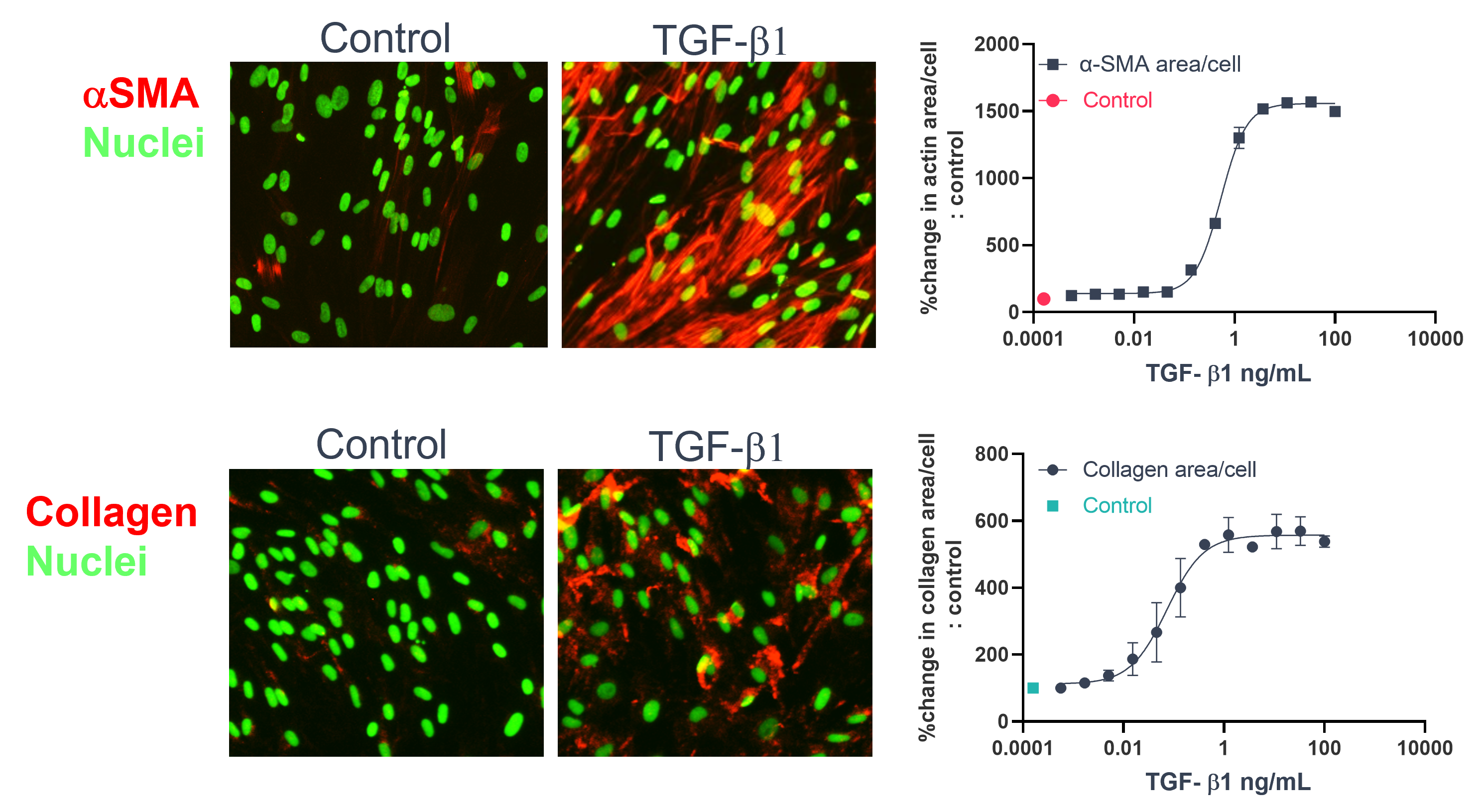
Fibroblast‑to‑Myofibroblast Transition (FMT) Assay
- Quantification of fibroblast differentiation into a pro-fibrotic, pro-proliferative myofibroblast phenotype
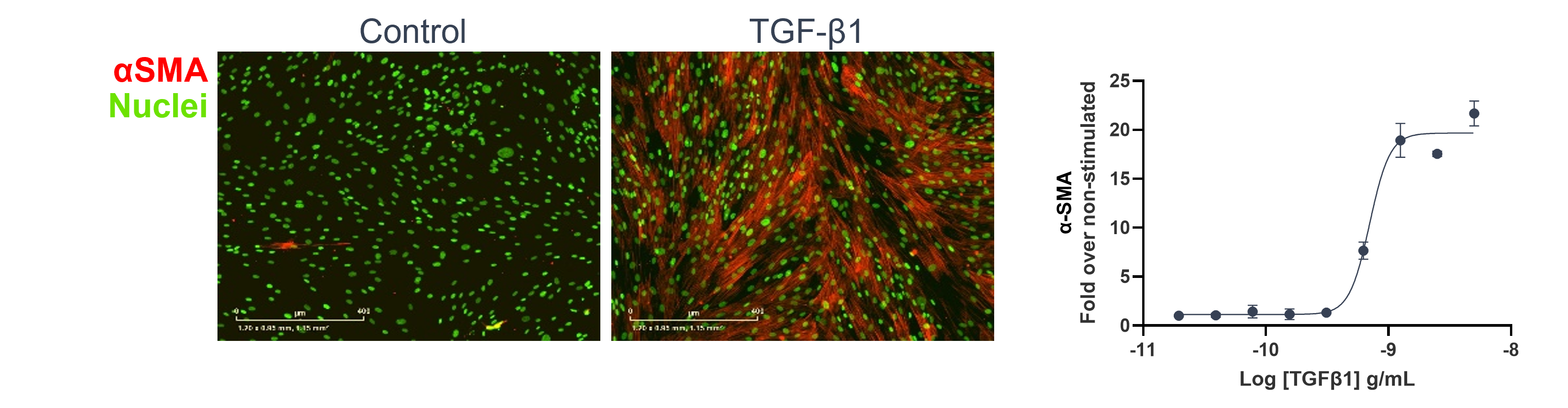
Epithelial‑to‑Mesenchymal Transition (EMT) Assay
- Quantification of matrix production from epithelial cells differentiating into a mesenchymal phenotype
Barrier Function Assays
- Using epithelial and endothelial systems, to provide barrier analytics:
- TEER‑based and fluorescent protein diffusion-based assessment of barrier integrity
- Tight‑junction and barrier protein quantification (e.g. ZO-1, filaggrin)
- Injury‑repair and inflammatory challenge models
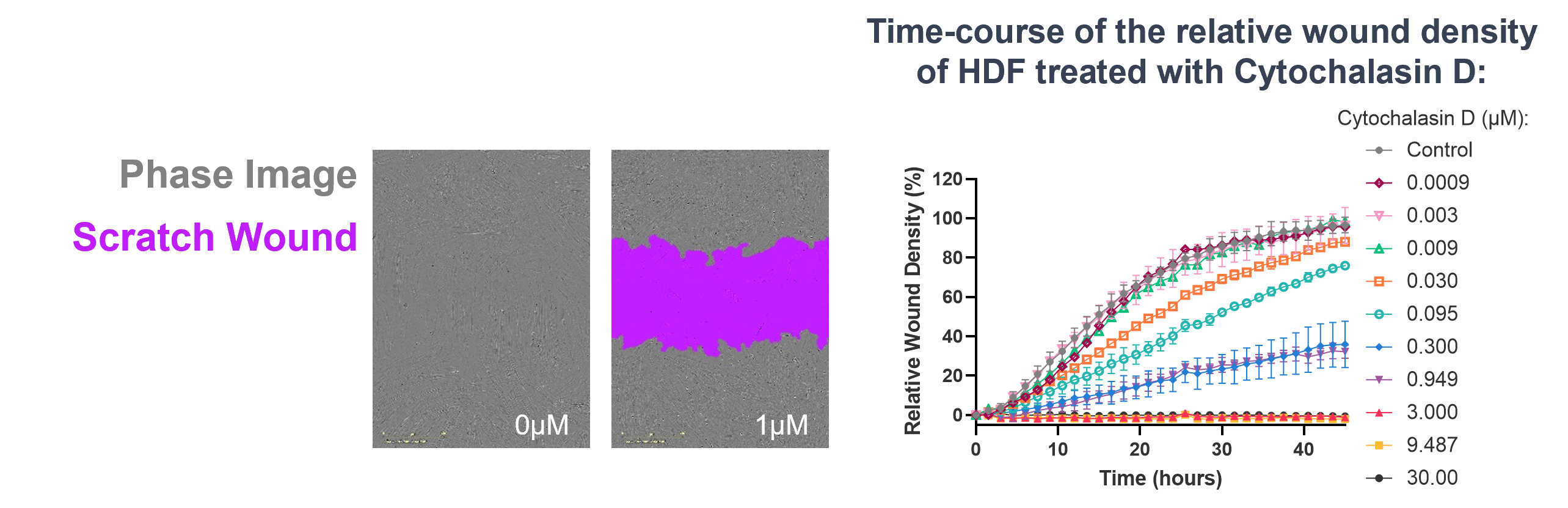
Scratch wound assay to measure epithelial or fibroblast wound healing
- Monitor uniform wound closure progression in real time using Sartorius Incucyte® S3
Pathway activation
Quantitative assessment of classic pro-fibrotic pathways such as phospho-SMAD2/3 pSMA2/3 at the protein or mRNA level.
Why Partner with Domainex?
Flexibility
Every assay at Domainex is custom‑designed: cell types, matrix components, cytokine environments, multi‑cellular co‑cultures can be adapted to answer your questions specific to the biological and therapeutic end point.
Deep Scientific Expertise
Domainex’s team combines decades of experience in fibrosis biology, immune‑stromal interactions, and advanced cellular modeling, aligned with current mechanistic insights from immunology and fibrotic cell research.
Collaborative Partnership
We function as an extension of your internal R&D team, ensuring transparency, rapid iteration, and scientifically rigorous data interpretation throughout every project stage.
Rapid Turnaround
Responsive rapid turnaround times and across our fibrosis model platforms enabling quicker decision-making and streamlined preclinical progression.
What types of fibrosis assays does Domainex offer?
Domainex provides a suite of physiologically relevant human in‑vitro models designed to replicate key mechanisms of fibrosis. These include:
- Scar‑in‑a‑Jar assay for accelerated extracellular matrix (ECM) deposition
- Fibroblast‑to‑Myofibroblast Transition (FMT) assay
- Epithelial‑to‑Mesenchymal Transition (EMT) assay
- Barrier function assays using epithelial and endothelial systems
- Injury‑repair and inflammatory challenge models, including scratch‑wound assays
- Pathway activation assays (e.g., phospho‑SMAD2/3)
These platforms support discovery, validation, and optimisation of next‑generation anti‑fibrotic therapeutics.
What diseases or biological processes do the fibrosis assays model?
Domainex’s fibrosis assays model:
- Excessive ECM deposition
- Persistent inflammation
- Aberrant wound healing
- Tissue stiffness and remodelling
- Immune–stromal interactions involving macrophages, T cells, NK cells, dendritic cells, fibroblasts, and epithelial/endothelial cells
These mechanisms underpin conditions such as pulmonary fibrosis, interstitial lung diseases, liver fibrosis, cardiac fibrosis, and kidney fibrosis.
What cell types can be used in Domainex’s fibrosis assays?
Domainex has access to:
- Healthy and diseased primary human fibroblasts
- Primary epithelial cells
- Endothelial cells
- Immune cell types (e.g., macrophages, T cells, NK cells) for co‑culture or pathway modulation studies
Assays can be customised with specific cell types to match your therapeutic hypothesis.
What does the FMT (Fibroblast to Myofibroblast Transition) assay measure?
The FMT assay quantifies the differentiation of fibroblasts into myofibroblasts, a key driver of fibrosis. This includes:
- Increased contractility
- ECM production
- Pro‑proliferative phenotype markers such as α‑SMA
This assay is ideal for evaluating anti‑fibrotic compounds targeting fibroblast activation.
Can Domainex measure pathway activation relevant to fibrosis?
Yes. Domainex can quantify activation of pro‑fibrotic pathways, including:
- TGF‑β/Smad signalling (e.g., phospho‑SMAD2/3)
- Non‑canonical TGF‑β pathways, such as p38 MAPK, ERK1/2, and JNK
- NF‑κB
- JAK/STAT
- PI3K/AKT
- Wnt/β‑catenin signalling, relevant to myofibroblast persistence
- Integrin‑mediated mechanotransduction (e.g., αvβ6, αvβ1)
- ECM deposition and crosslinking pathways, including LOX/LOXL activity
Readouts can be performed at the protein or mRNA level. Assays can be configured to quantify pathway‑specific or phenotypic endpoints depending on the mechanism of action under investigation.
How does Domainex validate fibrosis assays for reproducibility and translational relevance?
Domainex's validation process includes:
- Multi‑donor reproducibility testing
- Dose–response benchmarking with known inhibitors
- Time‑course optimisation of TGF‑β stimulation
- Assessment of assay window stability across passages
- Cross‑platform correlation (e.g., ELISA vs. qPCR)
Domainex also evaluates potential artefacts such as compound cytotoxicity, autofluorescence, or interference with detection reagents.
Are the fibrosis assays customisable?
Yes. Every assay at Domainex is custom‑designed. Variables that can be tailored include:
- Cell types
- ECM components
- Cytokine environments
- Multi‑cellular co‑cultures
- Readout formats
This ensures alignment with your specific biological questions and therapeutic goals.
Can fibrosis assays be integrated into a broader drug discovery workflow at Domainex?
Yes. Domainex can integrate fibrosis biology with:
- Medicinal chemistry and SAR development
- Structural biology (X‑ray, cryo‑EM, NMR)
- Biophysical screening (SPR, MST, DSF)
- ADME/PK profiling
- In vitro safety pharmacology
What compound modalities can be evaluated in fibrosis assays?
Domainex can test:
- Small molecules
- Peptides and macrocycles
- Biologics (e.g., antibodies, fusion proteins)
- PROTACs® and molecular glues
- RNA‑based therapeutics (where compatible with the assay format)
Can Domainex support my fibrosis project with GPCR assays or biomarker analysis?
Yes. Many fibrosis pathways are driven by GPCR‑mediated signalling and measurable biomarker changes, and Domainex offers both capabilities:
- GPCR Services: Domainex provides a wide range of GPCR‑focused assays, including: binding, functional, and signalling readouts - that can be integrated into fibrosis programmes where GPCRs regulate inflammation, fibroblast activation, or tissue remodelling.
- Biomarker Services: Domainex also offers biomarker discovery and quantification services (e.g., cytokines, ECM proteins, pathway activation markers) to help you track pharmacodynamic responses, validate mechanisms of action, and strengthen translational relevance.
These services can be combined with fibrosis assays to create a comprehensive, mechanism‑driven screening and validation package.
What makes Domainex a strong partner for fibrosis research?
Domainex offers:
- Flexibility - fully customisable assay design
- Deep scientific expertise in fibrosis biology and immune-stromal interactions
- Collaborative partnership - acting as an extension of your R&D team
- Rapid turnaround - enabling faster decision‑making and preclinical progression
These strengths help accelerate the development of novel anti‑fibrotic therapies.
How do I start a fibrosis project with Domainex?
You can contact Domainex’s scientific team directly to discuss your project needs, assay options, and timelines. They will work with you to design a tailored study plan aligned with your therapeutic objectives.
Assays can be adapted for compound solubility, stability, and delivery constraints.
Start your next project with Domainex
Contact one of our experts today